 Timing 2026.4.1 for Mac offers an automated time-tracking solution that records how you spend your time on your Mac without requiring you to remember to start and stop a timer for each task.Instead of relying entirely on manual time entry, Timing runs discreetly in the background and logs the applications, documents, and websites you use. You can then organize those activities into projects, review your schedule, and generate reports based on your actual work.
This approach can be especially useful for freelancers, consultants, developers, designers, writers, remote workers, and agencies that need accurate time records. It can also help individual users understand their productivity habits and identify how they spend their work hours.Timing 2026.4.1 is more than just a basic timer. It combines automatic activity tracking with project organization, manual time entry, calendar integration, reporting, productivity measurement, rules, and optional synchronization. The result is a flexible workflow that reduces the time spent manually logging tasks.The application is designed as a native Mac utility, rather than a browser-based productivity tool. According to the developer, its tracking system has minimal impact on the system, with average CPU usage of less than 0.5% and typical memory usage of less than 50 MB.
Features
- Automatic Time Tracking
- The biggest advantage of Timing is that you don’t have to remember to start a timer every time you begin a task.
- Tracking Applications, Documents, and Websites
- Timing goes beyond simply logging an application name. It can record information about the active document and website when available, giving you a more detailed view of how you’ve spent your work time.
- For example, instead of just seeing that you spent two hours in a browser, your activity history can provide more useful context about the websites you worked with.
- Project-Based Time Management
- Projects are the core of Timing’s organizational system. You can create as many projects as you need and assign the logged activities to them.
- This makes the software useful for freelancers managing multiple clients, developers working on different applications, or employees who divide their time among various responsibilities.
- Smart Rules
- Timing can automate activity categorization using its rules system. Once you establish rules for common activities, future tracking will require less manual organization.
- Interactive Timeline
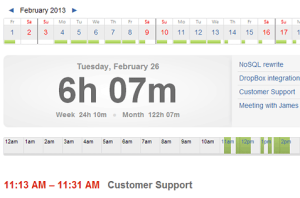
- The interactive timeline gives you an overview of your day. You can review logged activity, identify gaps, and add time entries where needed.
- Manual Time Tracking
- You can create a time entry for a specific time block and assign it to a project. This makes the application flexible enough to handle work that automatic activity tracking can’t detect.
- Calendar Integration
- Timing can display Apple Calendar and iCloud Calendar events directly in your timeline. Users can create time entries based on these events.
- Call and Meeting Tracking
- The software can recognize compatible video and voice calls and prompt users to log the associated time after the call ends.
- This can reduce the likelihood of forgetting to log meetings that aren’t directly reflected in normal app usage.
What’s New
- Improved Advanced Reports
- Fixed-width columns now automatically adjust to their content.
- Improved Tracking in Claude Desktop
- The update restores tracking of non-Code and non-Cowork chat titles in the Claude desktop app and adds support for Cowork chat titles.
- Updated WhatsApp Tracking
- Update 2026.4.1 improves chat name tracking for the latest version of WhatsApp Desktop.
- New Project Drag Zone Option
- The update adds an option to create rules from items dragged to the project drag zone. Users who prefer to manage rules manually can disable automatic rule creation and continue assigning dragged activities, files, or folders to projects.
- Helium Browser Support
- Version 2026.4.1 adds support for URL tracking in the Helium browser.
Pros & Cons
Pros
- Automatic time tracking.
- Logs apps, documents, and websites.
- Powerful project organization.
- Flexible manual time logging.
- Interactive daily schedule.
- Automatic downtime detection.
- Calendar integration.
- Detailed reports and export options.
- Productivity score.
- Syncs across Macs.
- Access the web app.
Cons
- Initial setup may require several macOS permissions.
- Automatic tracking may require some customization for complex workflows.
- Advanced features are geared more toward professional time trackers than casual users.
- Some cloud-based features require Timing Sync..
Screenshots: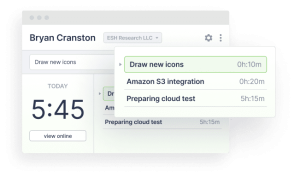
System Requirements
- Operating system: macOS 12 Monterey or later
- Processor: 64-bit Intel or Apple Silicon processor
- RAM: 4 GB minimum (8 GB recommended)
- Storage: Approximately 200 MB of available disk space
- Display: 1280 × 800 resolution or higher
- Internet connection: Required for updates, syncing, web access, and optional online features.
Installation Guide
- Download the Timing 2026.4.1 installer for Mac.
- Open the downloaded DMG file or installer.
- If you used a DMG installer, drag Timing to your Applications folder.
- Launch the application from Finder or Launchpad.
- Grant the necessary macOS permissions when prompted.
- Enable Accessibility access if prompted so Timing can obtain more detailed information about active applications and documents.
- Keep the Timing tracker running in the menu bar, as it must be active for automatic tracking to function.
- Configure your preferred work hours, downtime settings, projects, and tracking options.
- Add rules for frequently used applications or activities to automate project categorization.
- Enable Timing sync if you want to sync across Macs or access the web application.
- Start working normally and review your recorded activities on the Timing timeline.
Benefits
- Save time on manual tracking
- The biggest advantage of Timing is that it eliminates much of the repetitive work associated with traditional time trackers.
- Instead of constantly asking yourself if you started the right timer, Timing automatically records your activity on your Mac and lets you organize it later.
- Improve billing accuracy
- Freelancers and consultants can use detailed activity logs to create more accurate timesheets and invoices. Reports can be exported in several common formats for further processing.
- Understand how you spend your workday
- Timing shows you how much time you actually spend on different applications, websites, and projects.
- This can be eye-opening for users who frequently switch tasks or underestimate the time spent on certain activities.
- Reduce forgotten hours
- Automatic tracking is especially helpful when you forget to start timers. The application continues to record compatible activity in the background, reducing gaps in your work history.
- Organize Multiple Clients
- Freelancers can create separate projects for different clients and use rules to automatically categorize recurring activities.
- This creates a more organized invoicing workflow and reduces administrative work.
- Manage Remote Work
- Remote workers often switch between meetings, browsers, communication tools, documents, and project applications. Timing integrates all these activities into a single timeline, making it easy to review the entire workday.
- Analyze Productivity Patterns
- Productivity ratings and detailed reports help users understand which projects are receiving the most attention and where work habits can be improved.
- Track Offline Work
- Not all productive activities take place on a computer. Timing’s manual time entries allow users to record meetings, phone calls, travel, and other offline activities that automatic tracking can’t capture.
Performance Review
Timing 2026.4.1 for Mac works especially well as a continuously running productivity utility. Its purpose isn’t to replace your main applications, but rather to discreetly monitor your work activity and turn that information into useful time logs.
The tracker is designed to run in the background with minimal system impact. According to Timing’s documentation, its average CPU usage is less than 0.5%, while typical memory consumption is less than 50 MB.
This low consumption is important because a time tracker is most useful when you can leave it running all day without constantly checking on it.
The automatic tracking system is also more practical than a simple stopwatch for users who frequently switch between tasks. Instead of stopping one timer and starting another, Timing records the active application and related activity, allowing you to organize the information later.
The timeline is another highlight of the experience. It provides a visual representation of the day and makes it easy to spot missing periods. Manual entries can be added as needed.
Project rules further improve efficiency. Once common activities are categorized, less manual sorting is required. This is increasingly useful for freelancers and professionals who repeatedly work on the same projects for clients.
The reporting system is equally valuable. Exporting data to PDF, XLSX, CSV, or HTML offers flexibility for invoicing, internal reviews, and productivity analysis.
Version 2026.4.1 also demonstrates the developer’s continued improvement of compatibility with modern applications. Enhancements for Claude, WhatsApp Desktop, Outlook, ChatGPT conversation names, Helium, and Microsoft Teams make the update relevant for users who rely on current Mac software.
In short, Timing 2026.4.1 is an excellent choice for users who want accurate time tracking without constantly managing stopwatches. Its combination of automatic tracking, project rules, reporting, calendar integration, and productivity analysis makes it a much more comprehensive tool than a basic time-tracking application.
FAQs
- What is Timing 2026.4.1 for Mac?
- Timing 2026.4.1 is an automatic time-tracking application for macOS that logs activity in apps, documents, and websites, and organizes that information into projects and reports.
- Does Timing automatically track time?
- Yes. Timing automatically logs activity on compatible Macs while its tracker is running, so users don’t have to manually start and stop timers for each task.
- Can Timing track websites?
- Yes. Timing can track websites in compatible browsers and applications.
- Can freelancers use Timing for invoicing?
- Yes. Timing’s project organization and reporting tools make it especially useful for freelancers and contractors who need detailed work logs and timesheets.
- Does Timing support manual time entry?
- Yes. Users can manually add time blocks for activities that aren’t automatically logged, including offline work.
- Can Timing log meetings?
- Timing integrates with calendar events and supported voice/video calls, allowing users to log meeting time.
- Is Timing compatible with Macs running Apple Silicon processors?
- Yes. Timing is a native Mac application and is compatible with modern Apple hardware. The current version, 2026.4.1, requires macOS 12 Monterey or later.
- Does Timing slow down a Mac?
- The developer states that the tracker has an average CPU usage of less than 0.5% and typically uses less than 50MB of memory, indicating relatively low background resource consumption.